Poustinia of May 31st, 2019
I’ll begin by developing a word from Mass, but first a little context. I’ve picked up a bio on the life of Tolkien. His work and influence being such a defining feature of my childhood, it’s fascinating to see the events and experiences that shaped his mind and worldview, of which were eventually to blossom into the poetry that would become his legacy.
More than that, there is a sense of awe at seeing his life from that perspective, knowing that all of his experiences would in some way touch mine a hundred years later. How we came from two very different cultural paradigms and yet have both tasted the same elusive thing: the deep depths of to kalò… the good One.
He is one of the many poets of the ages that use their art to define those inchoate echoes of an ancient beauty that beckoned to them from a distant place. My hope is to capture one of those echoes… and discover the Music at its source.
I believe in some way that God seeded something in Tolkien that will blossom in my day. His work could have been a primer of sorts. I also see in roughly perceptible ways the “seeds” that are being planted in my own life, and for that matter happened planted through the course of all my life. They remain seeds the moment, but I sense the coming germination of some of them…
What God has been preparing me for is anyone’s guess. All I know is that I can see an action at work through the course of recent history. My prayer at mass today was that I would be given the graces to further allow myself to be an instrument for God’s plans, where came the word loved instrument.
My spirit told me that something was wrong with this. Now that I’ve thought about it, I think it put words to a wordless image many Christians have of themselves in God’s eyes. We aren’t sons and daughters, but tools — albeit prized and appreciated tools. The primary motive is to use the tool/instrument effectively to achieve an end, but also to take care to make sure the tool doesn’t wear out by seeing to its general happiness and well-being, the secondary motive.
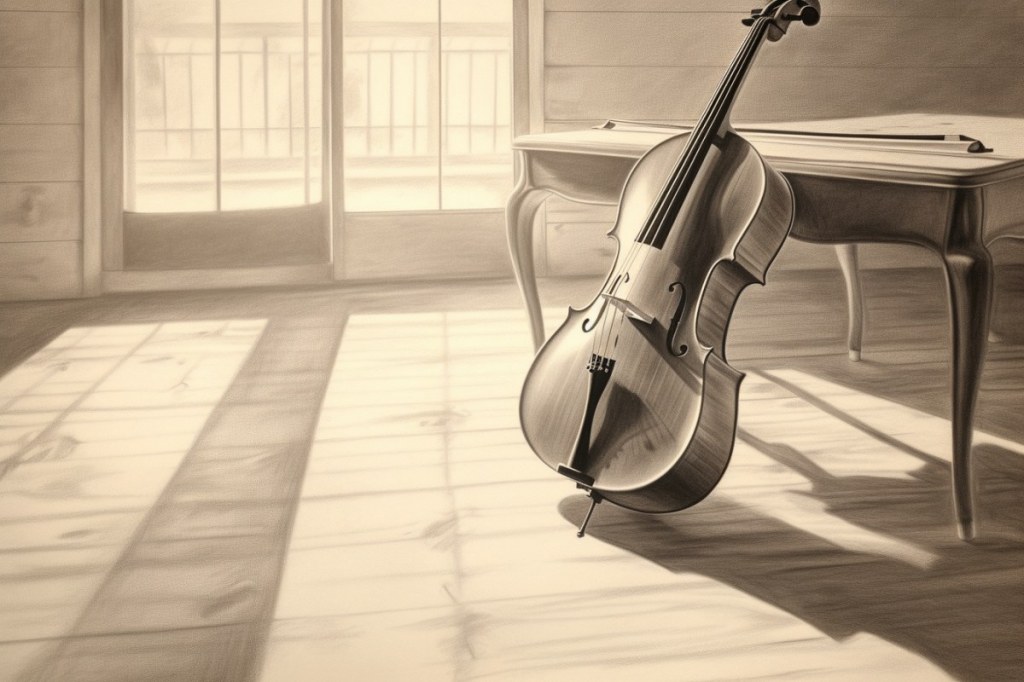
The image has been made that we are musical instruments and God the musician. Poetic, with an extent of truth, but it skews the concept of how we really stand before God. It implies that God “uses” us somehow. What God does with this is beautiful, yes, but it still leaves one with a poor concept; God has some sort of plan, it’s big, it’s beyond me, I might not always be able to see where it’s leading, but I’m going to surrender to him nonetheless and allow him to “do his work in my life”. In the meantime I grow as a person and receive consolations, striving for heaven all the while.
In this I don’t think the central focus is following Jesus, which is an act of the will. It’s merely letting him do his thing, in some mystical sort of way. We believe in him, we (think) we know his love for us, we live a good life, remaining in a state of grace to the best of our abilities and the rest is up to God. Hopefully he’ll be able to work some good in our lives.
This stands in disagreement with the Christian life as being a quest. A world to be explored and adventures to be had, all in pursuit of one ultimate goal: fusion into the very heart of the Father of All. Jesus said, “I am the way, the truth and the life.” The Christian is one who discovers the little, hidden, yet luminous Way, along which he discovers the Truth, which in turn brings him Life. He comes alive, inside and out, but he is still walking on a path. He continues to respond to the prompt, “follow me”. The point is, he is going somewhere.
Does a “loved instrument” go anywhere? It seems not. Instead, it seems God does all the moving. And acting. And willing. We only need give him room to do so, passively existing as an unseen force effects unseen ends.
Are not our own lives a daily response to the question, “do you love me?” Isn’t this the very point of the whole show, to use our created will to choose the creator? Now of course all Christians should agree that we aren’t simply standing–by as we lead our good lives whilst God moves about undetected. We believe he has a master plan, and that he wants our help in bringing it about (not that he needs it. The point lies in the participation). We pray that his “kingdom would come”, and know that each of us has a part to play as members of his body, his vine.
So sure, you could say we’re like instruments to him, insofar that we have a choice to surrender our lives to him or not, which is the only thing he needs to affect things through us. It is, like Mary’s, our yes that counts, and saying that over and over and over again, “accepting whatever befalls us” (Sir 2).
I only want to make the distinction that it is not the effects that are the end. They are the means to bring love into the world, the outpouring of self into the other… and that’s all his kingdom really is: a universal community whose members pour themselves out into each other.
Once that begins, there flows a motion of sorts. Just think of it, everyone in the world constantly in the act of giving to and receiving one another. Connection happens. Today, however, the world is a place where you take from your surroundings and put into yourself. It’s static. Anyways, I’m digressing…
I would only that one shouldn’t think God wishes our availability so as to carry on with plans that may or may not directly concern us, showering trivial niceties on us to keep us occupied and content. Of course no one really thinks this way explicitly, but even unconscious ideas left unconsidered can be debilitating. Here, I believe it robs the Christian walk of the zest that naturally follows from the mutual collaboration with the Lord, replacing it instead with the banal adherence to seemingly antiquated mores.
 Excerpts from my Poustinia Days
One response to “Loved Instruments”
Excellent reflection! Much to chew on. “Inchoate”… touché! I just added a swanky new word to my vocabulary. Thanks, Bugs!
LikeLike